Hoof Boots for Horses
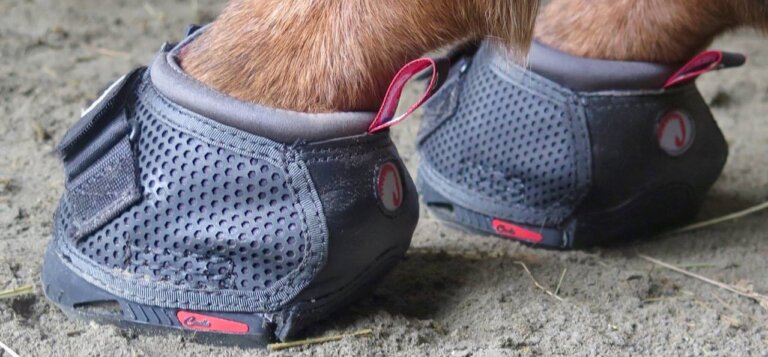
Hoof boots, also called horse boots, are removable boots that protect your horse’s hooves over almost any terrain, giving barefoot and transitioning horses sure footing without nailing anything on. Most owners reach for them on the trail, in the arena, through turnout and during rehab, and they suit horses, ponies, minis, drafts, donkeys and mules.
We’ve fitted equines on six continents, and we stand behind every boot with a 100% guarantee.

Choose Your Boot
Five models for full-size horses, in sizes 0 to 6.


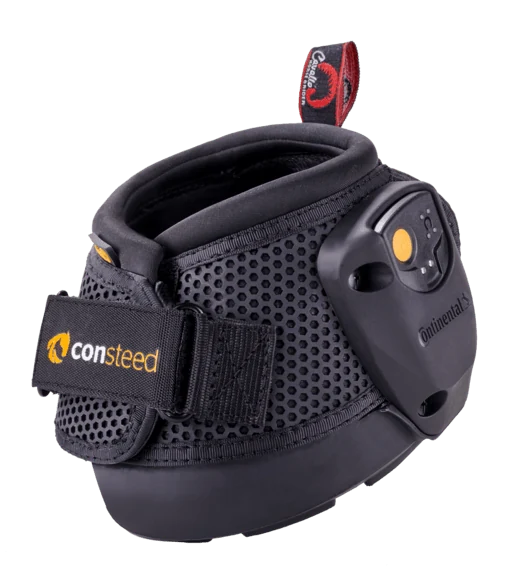
Consteed × Cavallo collaboration
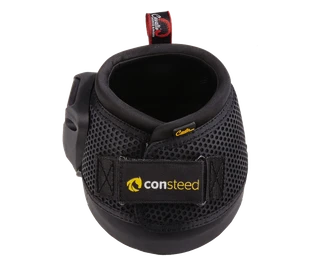
Discover the consteed smart sneaker
Seven force sensors sit in the sole of a Cavallo Trek boot and record how each limb meets the ground while your horse moves normally. You do not need a lab or a force plate to read the gait.
- Water and dirt resistant
- Works with or without horseshoes
- Up to 20 measurements per charge
- Different sizes can be combined
Boots for Donkeys, Minis and Drafts
Different animals, different hoof shapes. These boots are cut for other equines and are not sized for horses.





What Are Hoof Boots Used For?
Hoof boots are not only for the trail. Here is what owners use them for.
-
Riding any terrainGravel, rock, sand, and pavement, at any speed.
Barefoot & Booted Dressage Movement Reaches Olympic Level -
Hoof protection on hard groundSpares thin or sensitive soles on stony tracks.
Cavallo Hoof Boots Help Your Horse on Gravel -
Therapy & rehabilitationCushioned support while a hoof recovers.
Why Trek Makes the Perfect Therapy & Rehab Boot -
Transport & turnoutProtection in the trailer and over frozen or muddy ground.
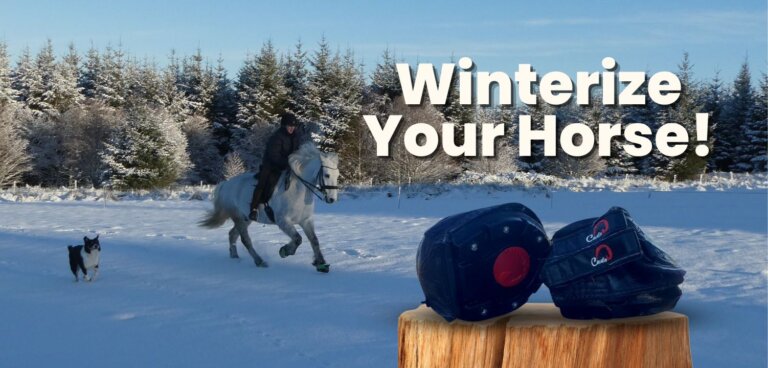
Tackle Winter Safely with Cavallo Hoof Boots & Studs! -
Everyday surprisesUses owners discover after the first ride.
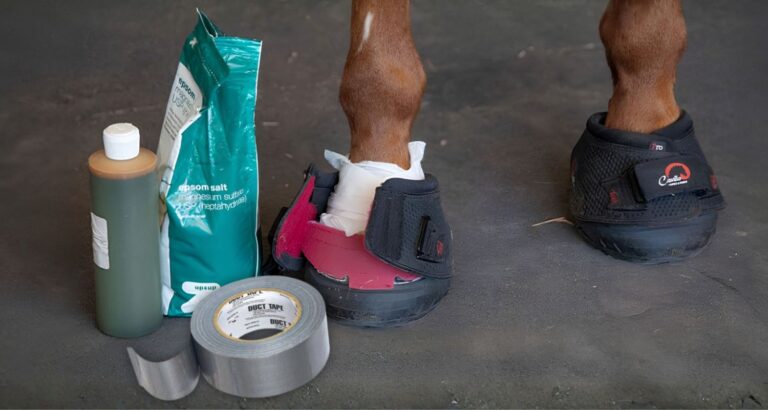
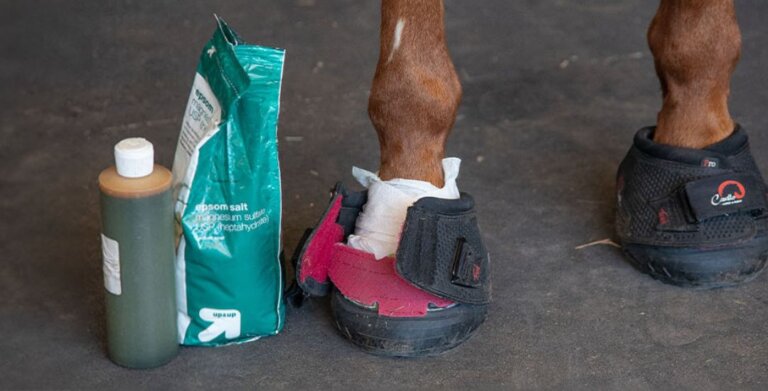
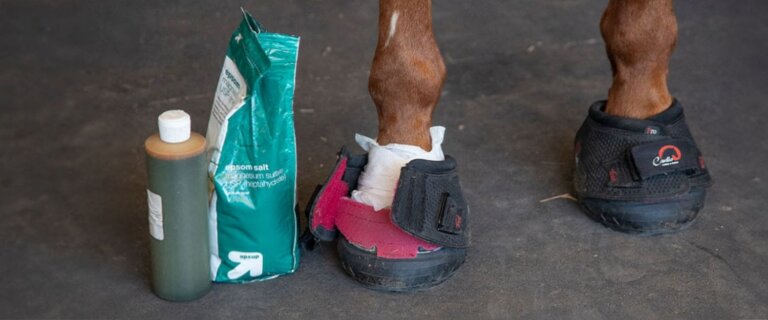
Using Cavallo Hoof Boots as Soaking Boots During Dry Weather
How to Choose the Right Hoof Boot
The right boot usually comes down to three things. Where you ride, the shape of your horse’s hoof, and what you need the boot to do.
Fit matters more than model. Measure the hoof before you choose, and size to the width as well as the length.

Boot Types & Models
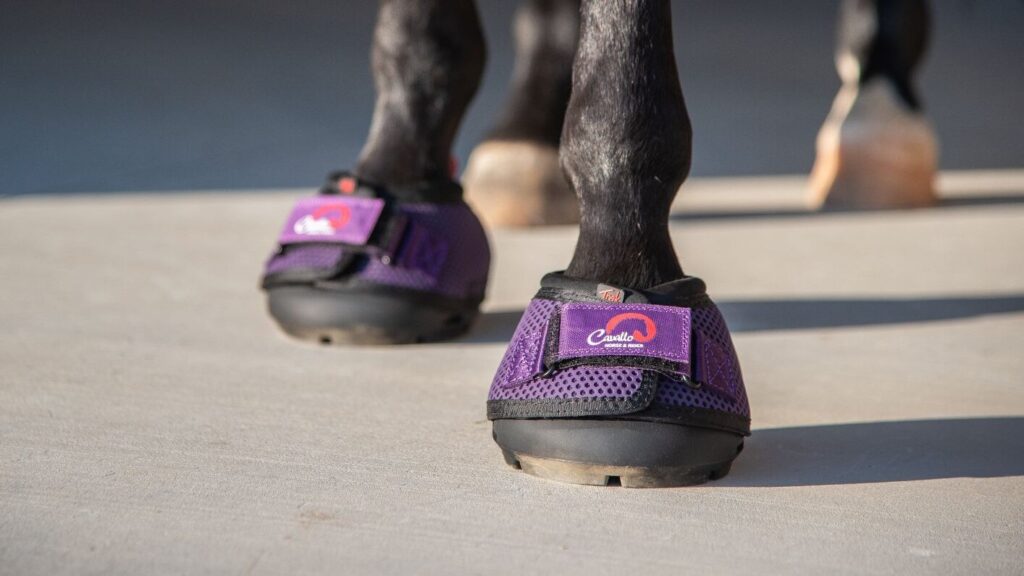
Nine models, every equine. Find the fit that matches your terrain and your animal.
| Boot | Best for | Sold | Notes |
|---|---|---|---|
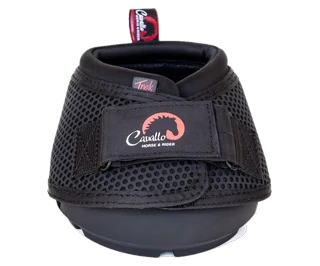
 TrekMost popular |
All-terrain riding | Per single boot | Most durable; most popular all-rounder |
|
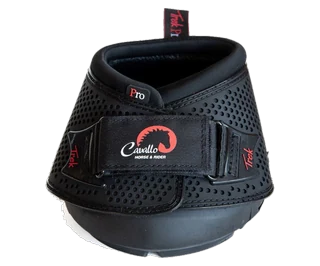
Trek Pro |
All-terrain riding | Per single boot | Fully moulded Pro Mesh, refined modern look |
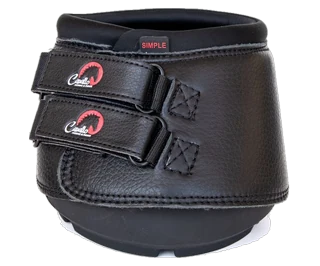
 Simple |
Classic leather fit | Per pair | Genuine leather |
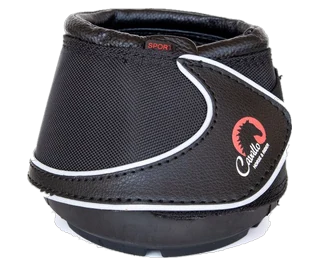
 Sport |
Performance & riding | Per pair | Lightweight |
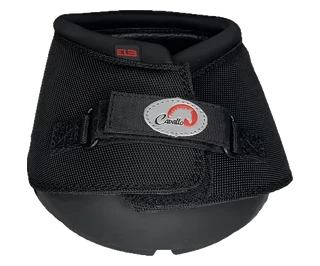
 ELB — Entry Level |
First-time booters, value | Per single boot | Nylon; budget-friendly |
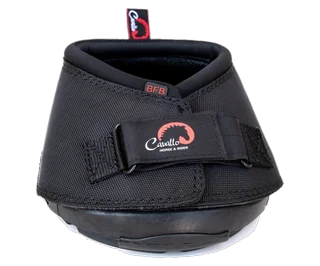
 BFB — Big FootCavallo exclusive |
Draft horses | Per single boot | Made for the largest hooves |
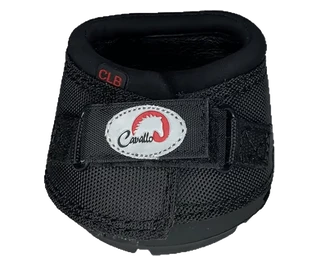
 CLB — Cute Little Boots |
Minis & ponies | Per pair | Made for small hooves |
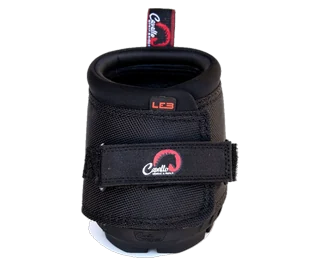
 LEB — Long Ear BootCavallo exclusive |
Donkeys & mules | Per pair | Purpose-built fit |
 Cavallo exclusive |
Gait and lameness monitoring | As a system of 1, 2 or 4 boots | Smart sneaker with built-in sensors for horses in training or rehab |
Boots for Conditions
For horses managing laminitis or navicular, the right boot can add cushioned, pressure-relieving support. Our dedicated pages cover fit and pad recommendations.
Accessories for Cavallo Hoof Boots
Boots work without any of these. Add one when your horse, your ground or your boots ask for it.

 Wraps and Sleeves
Wraps sit above the boot and add an extra layer of protection and comfort over the pastern and heel bulbs. Comfort sleeves do the same while a horse is breaking in boots.
See wraps and sleeves


Horse Boots: Sizing, Care and the People Behind Them
Sizing, care and the people behind the boots, in one place.
Get the Size Right
Look After Your Boots
From People Who Use Them
Hoof Boot Articles
-
-

-

-
-
-

-

-

-
-
-
-


Dr. Jennifer Gill led an independent hoof-boot study on Cavallo boots at Western Kentucky University.
The Science Behind Cavallo →Frequently Asked Questions About Horse Boots
What are hoof boots, and does my horse need them?
Hoof boots are a form of removable hoof protection. They support the hoof while allowing your horse to stay barefoot and move naturally. Hoof boots help protect against rough ground, gravel, pavement, hard footing, and hoof sensitivity.
Your horse may benefit from hoof boots if they are barefoot, transitioning out of shoes, tender after trimming, recovering from hoof issues such as laminitis, thin soles, or navicular-related discomfort, or needing extra traction and comfort during riding or turnout.
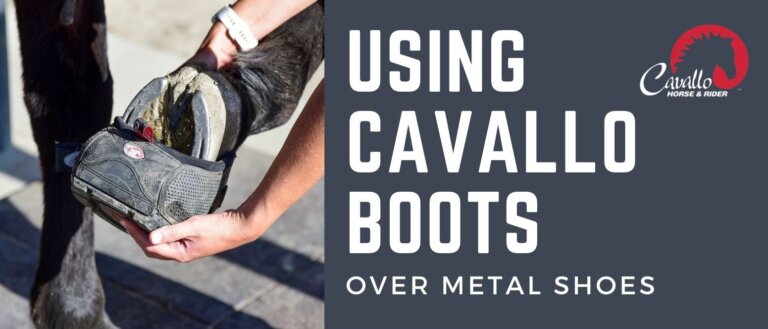
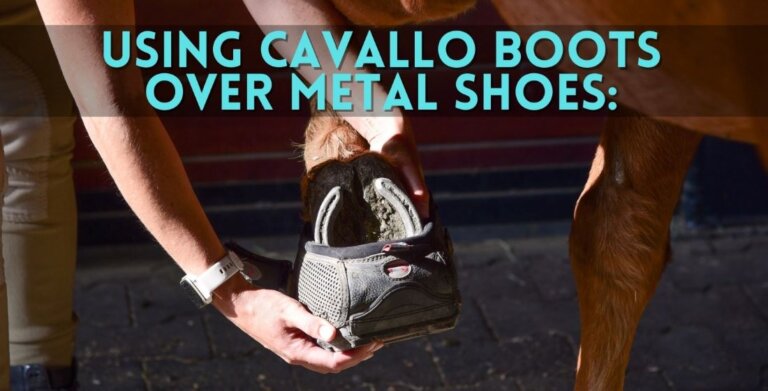
Cavallo Hoof Boots can also be used over traditional metal horseshoes with protection pads. This can help reduce the risk of lost shoes and provide extra protection when needed. Think of them as Nikes for your horse. They provide protection when it’s needed, while allowing the horse to remain barefoot the rest of the time. That means the hoof can continue to expand, flex and function naturally.
When I first introduced hoof boots over twenty years ago, many people thought they were only for horses with “bad feet.” Today, they’re used by everyone from weekend trail riders to competitive endurance riders. Just like we don’t wear running shoes to bed, horses don’t need protection every minute of every day. They need it when the terrain or the job calls for it.
Why choose hoof boots instead of metal horseshoes?
Hoof boots offer protection when your horse needs it, without permanently fixing anything to the growing hoof wall. This gives owners a flexible way to support comfort and protection while still allowing the hoof to expand, flex, and function naturally.
Because metal shoes are fixed to the hoof wall, they can limit natural hoof expansion and may increase concussion on hard surfaces. Hoof boots provide a removable option for protection, comfort, and support without committing to full-time shoeing, while still supporting healthy hoof function. Cavallo Hoof Boots protect the entire hoof, including the sensitive bulb tissue. They absorb shock and concussion rather than transmitting. I often tell people this isn’t about declaring one approach right and the other wrong. It’s about giving horses choices. Hoof boots let you protect the hoof when protection is needed, then remove them afterward so the hoof can function naturally the rest of the time.
Can hoof boots help during the transition from shod to barefoot?
Yes. Hoof boots are one of the most helpful tools during the transition from metal shoes to barefoot. After shoes are removed, horses often need time to build stronger soles, healthier frogs, a more robust digital cushion, and better overall hoof function before they are fully comfortable barefoot.
Cavallo Hoof Boots provide removable comfort and protection during this stage. They help horses keep moving comfortably and naturally while their hooves adapt.
We regularly hear from owners who say, “I almost gave up.” They removed their horse’s shoes, the horse became tender, and they assumed barefoot simply wasn’t possible. A properly fitted hoof boot often becomes the bridge that allows the horse to stay comfortable while stronger soles, healthier frogs and a more resilient hoof develop. A few months later, many of those same owners tell us they wish they’d made the change years earlier.
Can hoof boots be used on the front hooves only, or does my horse need all four?
Yes, Cavallo Hoof Boots can be used on the front hooves, hind hooves, or all four hooves, depending on your horse’s needs. Always match the left and right hooves when booting to help keep your horse balanced and comfortable.
Many horses only need hoof boots on the front hooves, as the front feet usually carry more weight and are often more prone to sensitivity. However, some horses benefit from boots on all four hooves, especially on rocky terrain, during rehab, or when all feet need protection.
The best choice depends on your horse’s comfort, workload, hoof condition, and the footing they travel on.
How do I know what size hoof boots my horse needs, and how often should I recheck the fit?
To find the right hoof boot size, measure the hoof width and length after a fresh trim. Accurate measuring is key because a good fit helps prevent rubbing, twisting, and lost boots.
Cavallo offers a Free Expert Sizing Service to make hoof boot sizing simple. Our customer service team is always happy to help.
Recheck the fit after trims, during the barefoot transition, or anytime the hoof shape changes. It is also time to recheck the fit if you notice rubbing, boot loss, twisting, difficulty applying or removing the boots, or wear and stretching in the boot materials or closures. We have a saying around Cavallo: Measure twice. Buy once.
A few extra minutes spent measuring carefully saves a lot of frustration later. Our Customer Care team sizes hoofs every single day, so don’t hesitate to ask—we genuinely enjoy helping people get it right the first time.
Can hoof boots be used for riding, jumping, dressage, trail riding, and other performance disciplines?
Yes, hoof boots can be used for many riding and performance activities, including trail riding, endurance, schooling, conditioning, arena work, dressage, jumping, hauling, transport, cross-country, and eventing.
Cavallo Hoof Boots are designed for practical, all-purpose hoof protection. As with any equipment, correct fit is important. A properly fitted boot supports movement, comfort, and confidence across many disciplines.
Can hoof boots be used on mud, water, snow, gravel, pavement, or rocky footing?
Yes. Cavallo Hoof Boots can be used in mud, water, snow, gravel, pavement, rocks, and other challenging footing. They are especially useful when footing is hard, sharp, slippery, or unpredictable.
Cavallo Hoof Boots offer traction and full-hoof protection, providing horses with more comfort and stability on challenging surfaces. When additional traction is needed, studs can be added to the boot soles and can be removed when no longer required.
How long can a horse wear hoof boots at one time?
Horses can usually wear hoof boots for the length of a ride or exercise session, as long as the boots fit properly. For turnout, rehab, or extended wear, check the hooves often and allow the feet to dry and breathe regularly.
Always monitor for trapped moisture, heat, or changes in comfort, especially when using boots for longer periods.
When boots are required 24/7 for rehab or therapy, Cavallo recommends using pastern protection as needed. This may include Pastern Wraps, Comfort Sleeves, or vet wrap. I often compare hoof boots to our own footwear. Most of us are happy to wear our riding boots all day on the trail, but we’re also happy to take them off when we get home. Horses appreciate that break, too.
Do hoof boots rub, twist, or fall off?
A well-fitted hoof boot should stay secure and comfortable during normal use. Rubbing, twisting, or lost boots usually point to a sizing, fit, trim, or application issue. In more than two decades, I’ve found that rubbing is almost always a clue rather than a flaw. It tells us something needs adjusting—perhaps the trim, the sizing, or how the boot is being applied. Once we solve that puzzle, horses generally go back to travelling happily and comfortably.
If you notice rubbing, twisting, or boot loss, recheck the measurements, trim timing, and how the boot is being applied. Pastern protection, pads, or a fit adjustment can also help in some cases.
Our customer care team is always happy to help troubleshoot fit or performance concerns.
Can hoof boots be used for turnout, rehab, soreness, or therapeutic support?
Yes. Whether you enjoy trail riding, endurance, dressage, jumping, pleasure riding or simply hacking around the farm, hoof boots can provide protection and confidence across a wide variety of disciplines.
Hoof boots can be a dependable support tool for turnout, hoof sensitivity, thin soles, abscess recovery, laminitis support, and other therapeutic needs.
They can also hold pads for added comfort, cushioning, and support. For medical or rehab cases, work with your veterinarian and hoof-care provider to choose the right booting schedule and support plan.
Our Cavallo care team is also happy to help you choose the best option for your horse.
How do I clean, care for, and know when to replace hoof boots?
After use, remove dirt, mud, stones, or bedding from the boots. Rinse them with water if needed, then let them dry fully before storing.
Check the stitching, straps, Velcro, tread, and upper material regularly. Replace hoof boots when the tread is worn, closures no longer hold securely, the boot shape is damaged, or the fit no longer supports safe movement.
Easily replaceable and optional style straps can be swapped out if the boot sole is still in good condition.
Pro tip: keep your old boots. They can be very useful for rehab cases when needed.
Are hoof boots cost-effective compared to metal shoes?
For many owners, hoof boots are more cost-effective than metal shoes because they are removable, reusable, long lasting and used only when needed. This can help reduce reliance on continuous metal shoeing while still providing comfort and protection on rough or challenging terrain. I remember meeting a gentleman at a horse expo who looked at the price of a pair of boots and immediately said, “That’s expensive.”
I asked him what he paid for shoeing.
He did the math in his head, smiled, and laughed.
“I never looked at it that way.”
Hoof boots are an investment, but unlike shoes, you don’t throw them away every six or eight weeks. Many owners use the same pair for years, making them one of the most economical pieces of tack they’ll ever own. Hoof-care costs vary by location, provider, and individual horse needs, but here is a simple example:
- Specialized or therapeutic shoeing may cost more.
- $200 per shoeing session
- 8 sessions per year
- $50 per trim
- 8 trims per year$400
- Cavallo Trek Boots, lasting at least two years$114.95 per year
Choosing barefoot with hoof boots may save about $1,085 per horse each year, while supporting natural hoof function, comfort, and long-term hoof health.